
Your support makes the impossible possible
Rounding a bend, 60kms north of Gin Gin, visibility plummeted to less than a metre and he hit the brakes. Seconds later, Glen’s B-double slammed into the back doors of another truck stopped on the road, knocking him unconscious.
When he opened his eyes, his body was engulfed by flames. Thinking only of his wife Roni and young son Hugo, Glen hauled his body through the smashed window, falling more than two metres to the ground.
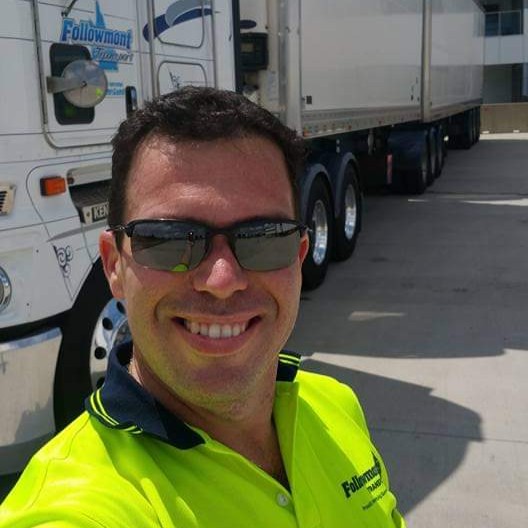
Pictured: Glen before his accident in 2020.
"Hugo was two and a half years old so I hadn't been a dad for long, and I still wanted to be a dad - that was my biggest motivator," said Glen.

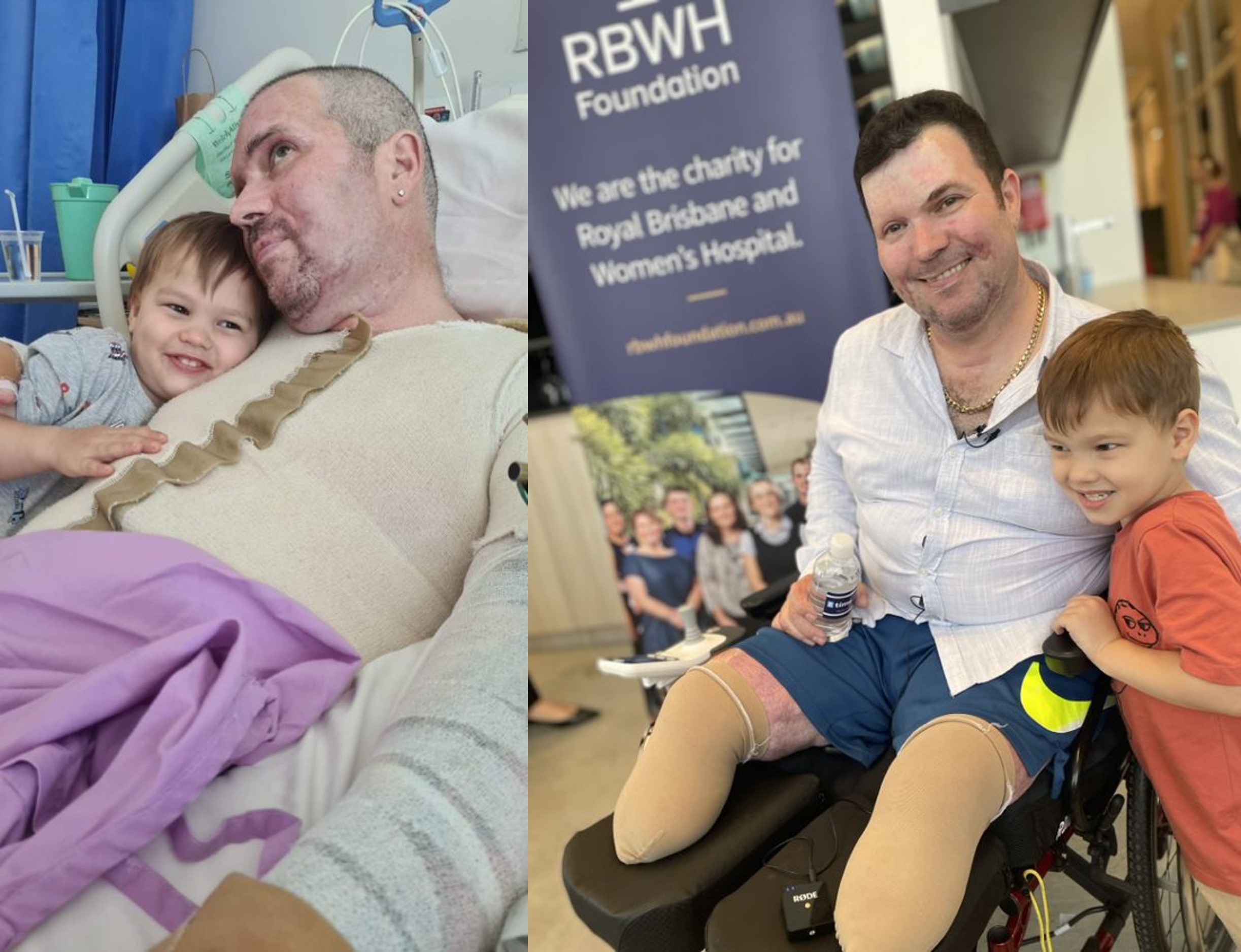
Pictured: Glen with son Hugo at the RBWH during his recovery.
Cared for by a paramedic while smoke cleared enough for a rescue helicopter to land, Glen called his wife to say goodbye.
“I rang Roni from the ambulance, told her that I loved her and I was very sorry because I really wanted to have a child but now, I was leaving her to be a single mum, leaving her in the lurch. That was a hard phone call to have.
“Then she heard me say, ‘you can put me to sleep now’."
“When I woke up, I was surprised to be alive.”
Glen was airlifted to Royal Brisbane and Women's Hospital (RBWH), where a multi-disciplinary team of trauma, intensive care and burns experts worked together to mend his shattered body.
Waking after 24 days in an induced coma, he learnt that both his legs had been amputated due to the severity of the burns. He had also broken his jaw, cheekbone, ribs, elbow, forearm and shoulder.
Maxillofacial surgery, orthopaedic surgery, burns surgery, metal plates, grafts and intensive rehabilitation followed.
Initially only able to use his finger to press the buzzer for help and blink his eyes, picking letters on a board to communicate, Glen’s prospects looked grim.
“I remember looking at Hugo. He sat on the end of my bed, and he ended up putting his hand on one of my stumps. He patted it nice and softly and told me that everything was going to be alright. He was a couple of months off three years of age.”
Glen spent six months on the burns ward, underwent 19 operations, numerous skin grafts and then undertook seven weeks of inpatient rehab.
“I was born in this hospital and thankfully, I didn't die in this hospital,” he said.
“When I worked, I worked hard. I put a lot of effort into my job - I worked some big hours. From very early on, I said my rehab is now my job. You work 38 hours a week, and very early on I had to work 38 hours a week on my rehab.”
The results of both expert care and Glen’s incredible determination are clear to see.
“I was warned that I would probably never walk. Not only did I learn to walk but I passed my driver’s competency so I can legally drive with my prosthetic legs.”
As Queensland's major quaternary and tertiary referral teaching hospital, RBWH provides highly specialised care not widely available elsewhere, giving patients like Glen access to world-leading expertise, advanced technology and leading-edge clinical trials.
Thanks to the generosity of RBWH Foundation donors, decades of investment in burns research have helped build one of the world's leading burns services - from Queensland's first Skin Bank to pioneering work in skin regeneration and 3D bioprinting.
Today, the RBWH Professor Stuart Pegg Adult Burns Centre has one of the world's best survival rates, ensuring more patients not only survive devastating injuries, but have the chance to rebuild their lives.
It’s because of this expertise that Glen is here today – a loving husband and father, running a new business, driving an imported Mustang and walking on his prosthetic legs.
He still attends twice weekly private physiotherapy sessions to keep building strength in his abs, quads and glutes for walking; and upper body strength for transferring out of his wheelchair. And, once a month, he’s back at RBWH for physiotherapy check-ins with staff he now considers friends.
"I was at the burns clinic recently and they said that I will be going there for the rest of my life,” said Glen.
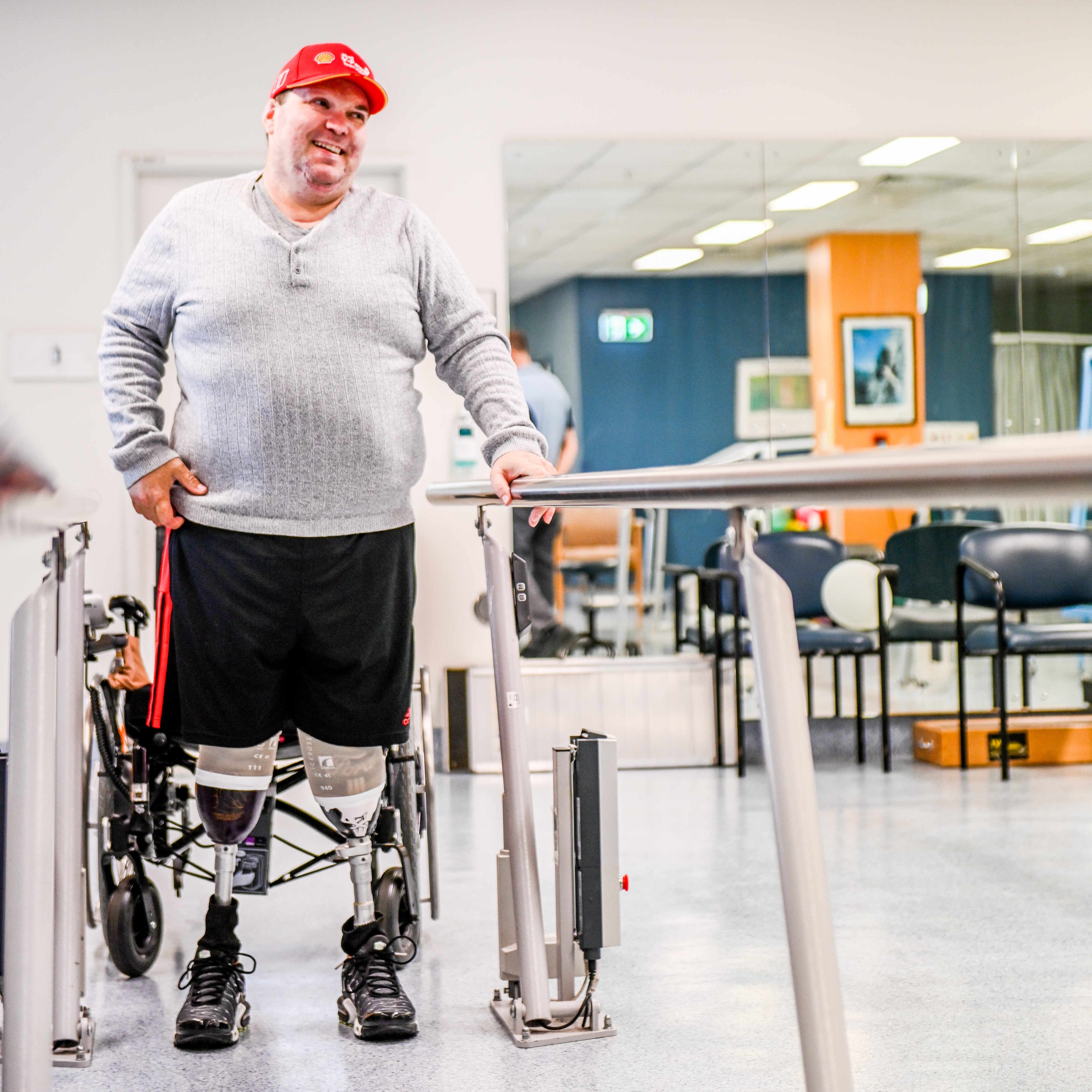
Pictured: Glen at his regular physiotherapy sessions at RBWH.
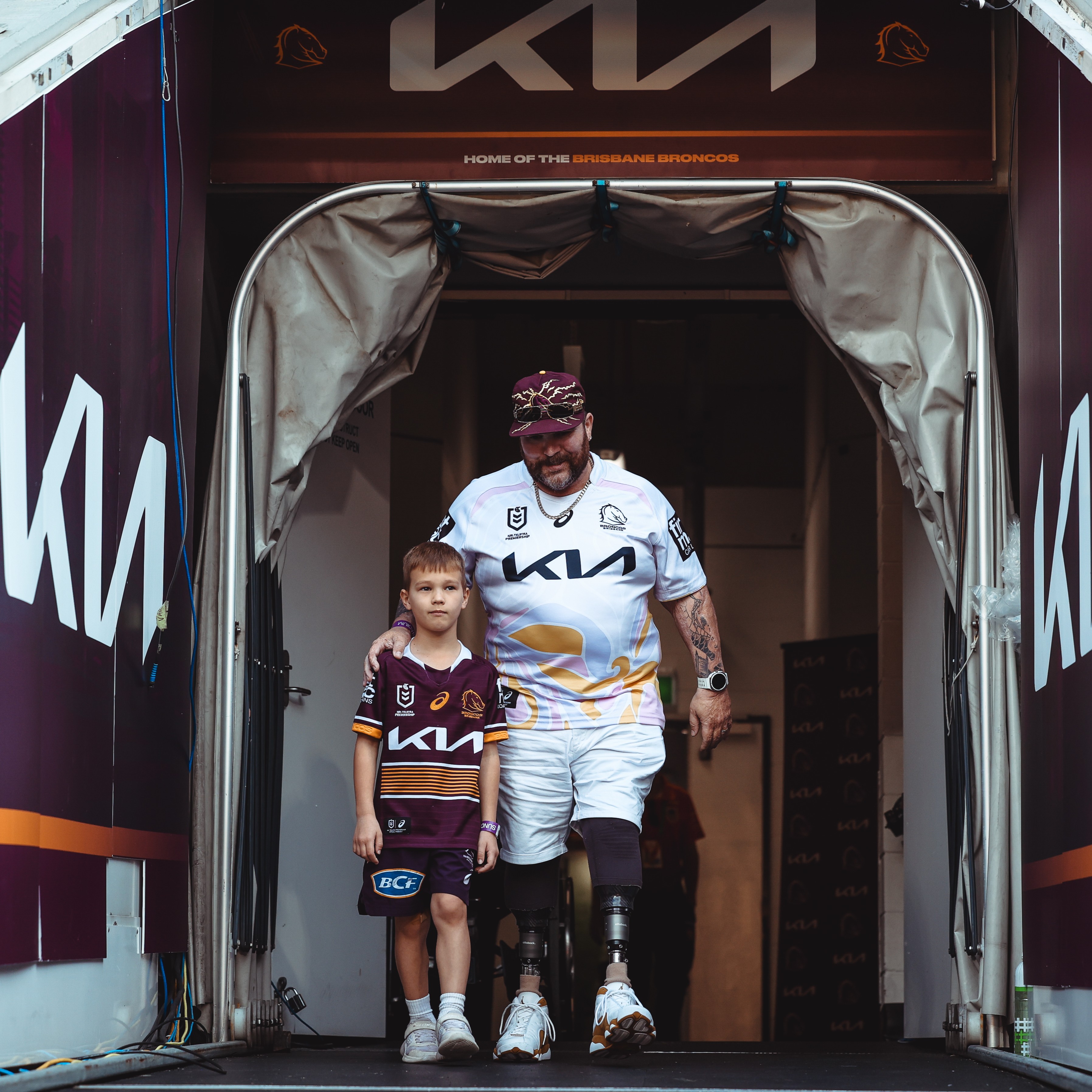
Pictured: Glen at the Broncos NRL game with son Hugo walking through the stadium tunnel.
“I don't have any issues going back to the hospital because I know I would be dead without their care."
Every breakthrough began as an idea that someone chose to back. The treatments that helped save Glen's life were once innovations themselves, and the research happening today will shape the care available to the next patient facing the unimaginable.
With your support, the RBWH Foundation can continue investing in the discoveries, technologies and compassionate care that give more people the chance to not only survive, but to return home, rebuild their lives and make a lifetime of new memories with the people they love.