For Dr Monica Ng, being awarded an RBWH Foundation Fellowship back in 2020 marked a critical career turning point – enabling her to combine direct care for patients with cutting-edge research into the global kidney disease epidemic.
“There was a long time where there weren’t a lot of treatment options for people with kidney disease,” said Dr Ng. “Despite rapidly rising numbers, we’re changing that.”
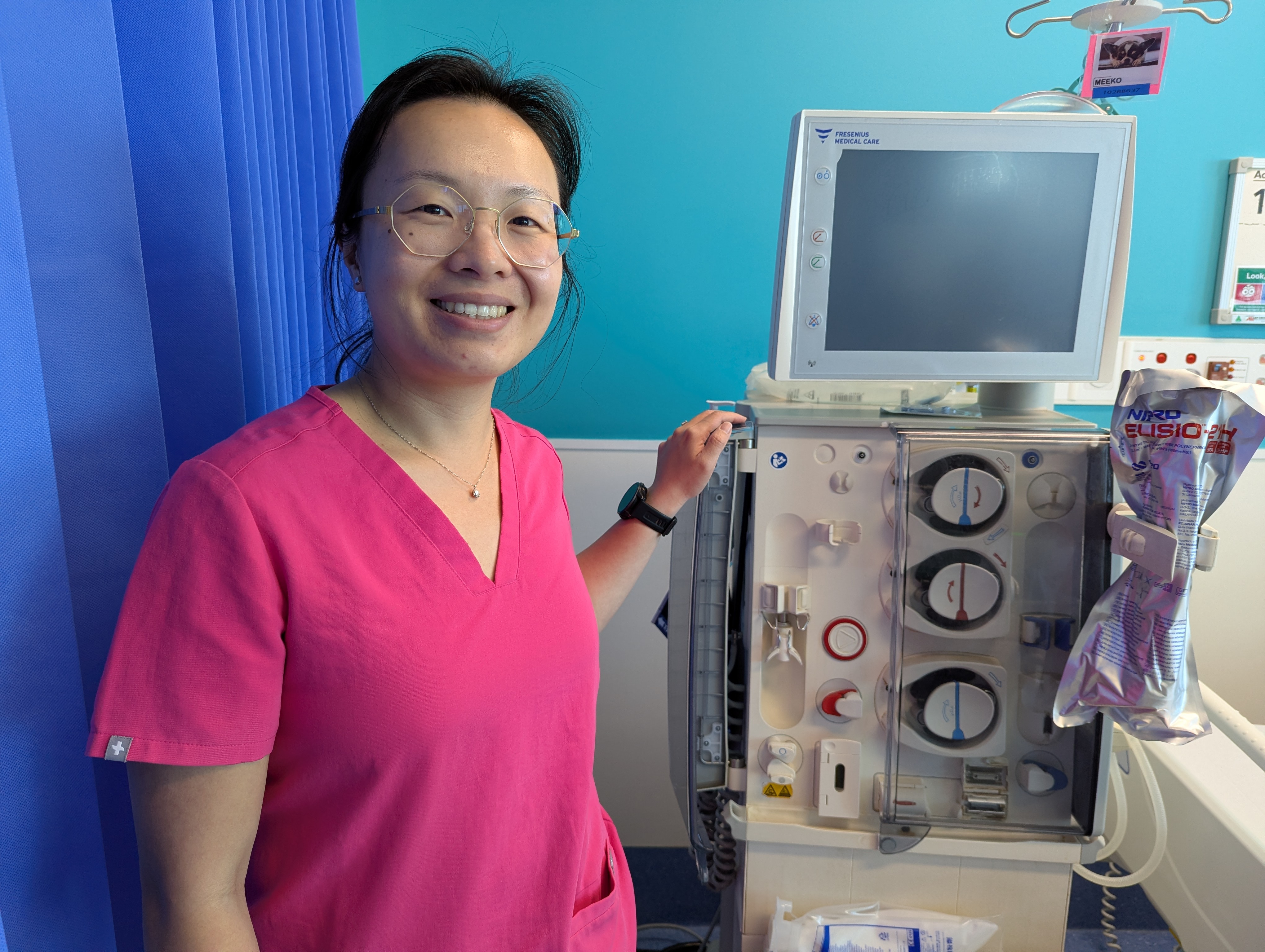

From that early investment, Dr Ng has continued to garner RBWH Foundation support, most recently for a study into the links between cardiovascular disease, liver disease and obesity, for which she also received the Foundation’s inaugural Ruby Award for top-ranked application.
The grant program’s scoring framework rigorously assesses each project’s rationale, study design, team capability, clinical need, and consumer involvement, ensuring donor funds support high-quality research with strong potential to improve practice.
Dr Ng’s project, which was ranked top by a panel of assessors, hopes to uncover biomarkers for chronic kidney disease and heart failure risk, which would enable teams to intervene earlier – a shift towards prevention rather than treatment.
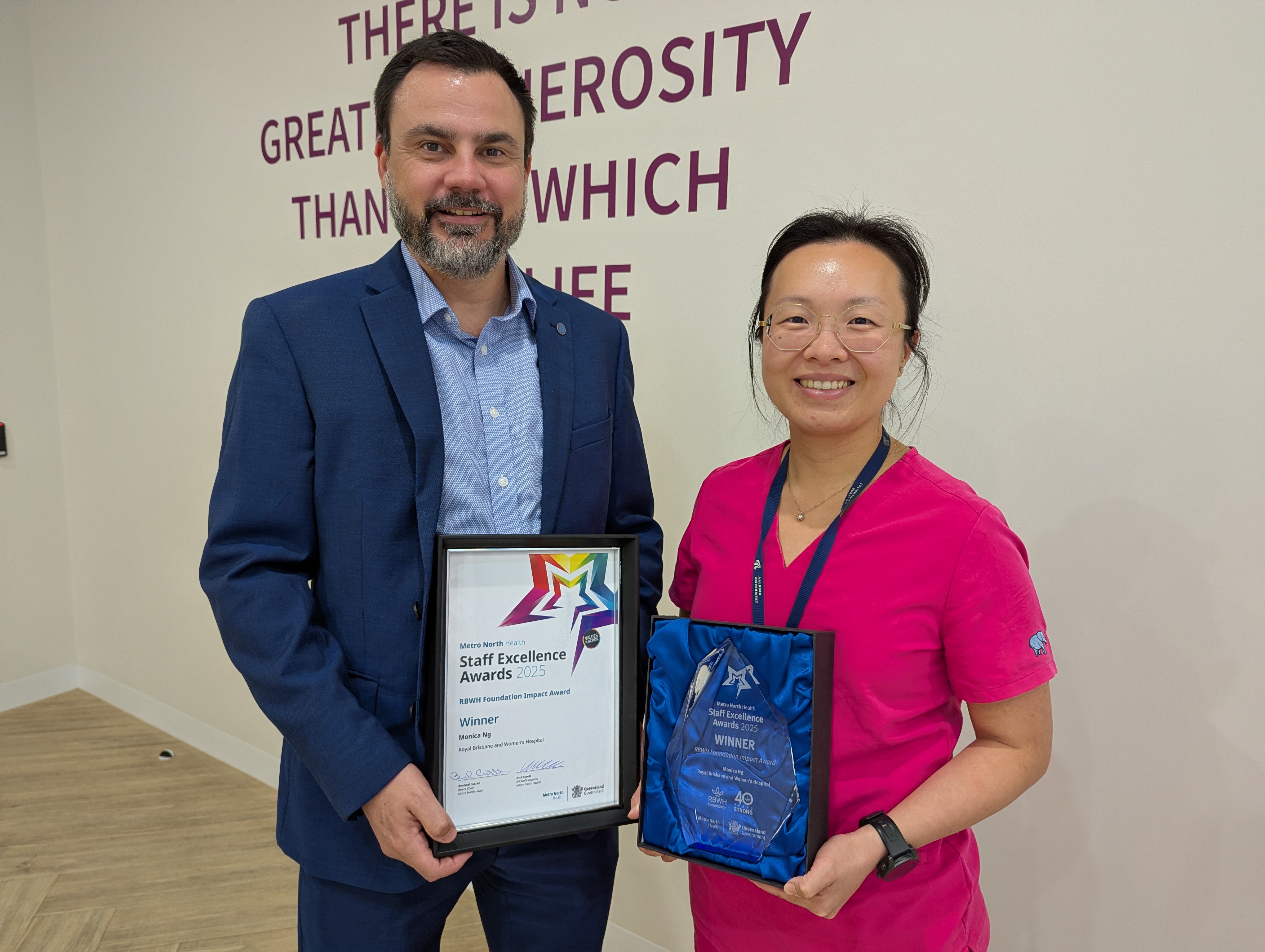
Funding life-changing potential
“It’s about diagnosing kidney disease earlier, so we can prevent people from progressing to kidney failure, as well as improving therapy selection, so we can identify the medications most likely to benefit that patient and prevent exposure to those that aren’t going to work or could cause problematic side effects.”
A huge part of kidney disease management, explained Dr Ng, is figuring out what’s going to work for an individual patient.
Care that’s about the whole person –
not just the condition
“We talk about the best care based on guidelines, but if the person in front of you can’t manage that - for whatever reason - it’s not right for them.
“That’s the art of medicine: care that extends beyond science to look after the whole person, not just the condition.”
And that means finding better solutions based on biology.
“The tests that we have so far will tell us what is causing the chronic kidney disease and its severity, but they don’t give very much information about individual biology,” said Dr Ng.
“So, we have limited capacity to answer the question, ‘what is MY risk of having the drug not work and what is MY risk of side effects?’ That’s where the new tests come in - being able to tell people what their probability of success and risk is based on their individual biology.”
Progress that’s only possible
because of your kindness
And for Dr Ng, it all began with that RBWH Foundation Fellowship – with the generosity of donors.
“Being able to access funding at that early stage of your research career is extremely important, particularly when you’re juggling clinical training at the same time,” said Dr Ng.
“The RBWH Foundation Fellowship supported my post-doctoral research while I was a registrar. By paying for things like reagents and equipment, it gave me the opportunity to develop my scientific and technical skills and demonstrate the outputs I needed to take the next steps, to accumulate further funding and start leading my own research.”
Paying for test tubes, lab kits and reagents might sound small, but for an early-career clinician researcher, it’s everything. Without those building blocks, there is no discovery - no progress.
Turning a growing need into an opportunity for change
And with kidney disease numbers rising – driven by aging populations, hypertension and metabolic diseases like diabetes – the work of Dr Ng and her teams has never been more important.
“Nephrology is a very special area of work – hugely rewarding,” said Dr Ng.
While always intrigued by the biochemical and mechanical complexities of kidneys, it’s the people, she said, that that drive her research.
“You look after people over a period of years, particularly when it comes to chronic kidney disease, and get to see them through so many significant life events. Getting to know them and, hopefully, being part of their journey to better health is the best part.”