
How VR helped a stroke survivor find her voice
Once the realm of science fiction and gaming, Cathy says an innovative RBWH Foundation funded VR project was crucial to getting her back out into her community, connecting, communicating and living life to the full.
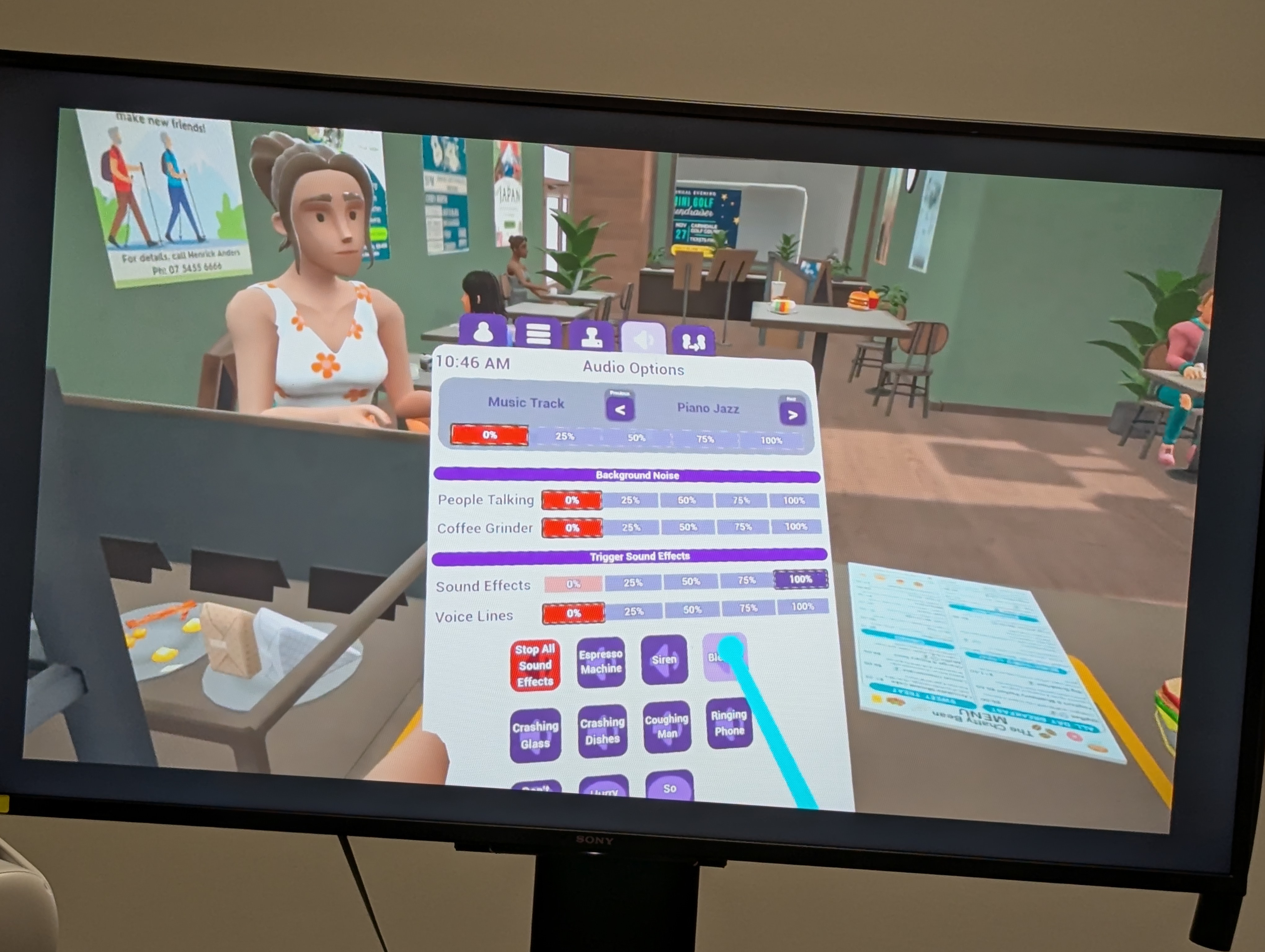
Formerly a primary school teacher, Cathy’s life changed profoundly when a stroke caused aphasia – a language disorder which affects around 140,000 Australians. While speech pathology was having an impact, progress often didn’t translate from a quiet, one-to-one session to the hustle and bustle of the real world.
Even visiting a café, Cathy said, was an ordeal – “my family or support worker would need to order for me”.
But all that was about to change, thanks to a groundbreaking project led by RBWH Advanced Speech Pathologist Dr Clare Burns and a team from The University of Queensland’s RECOVER Injury Research Centre.
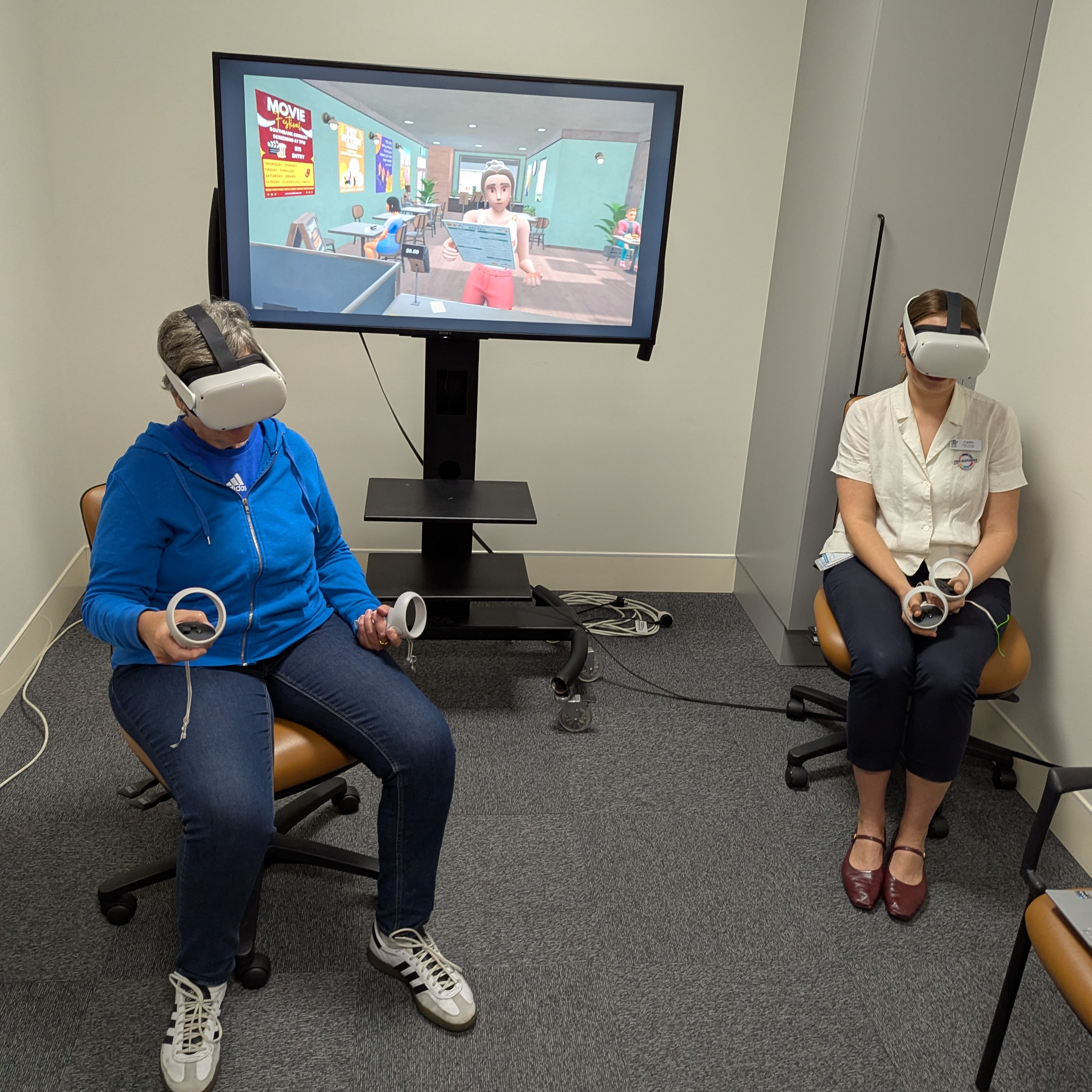
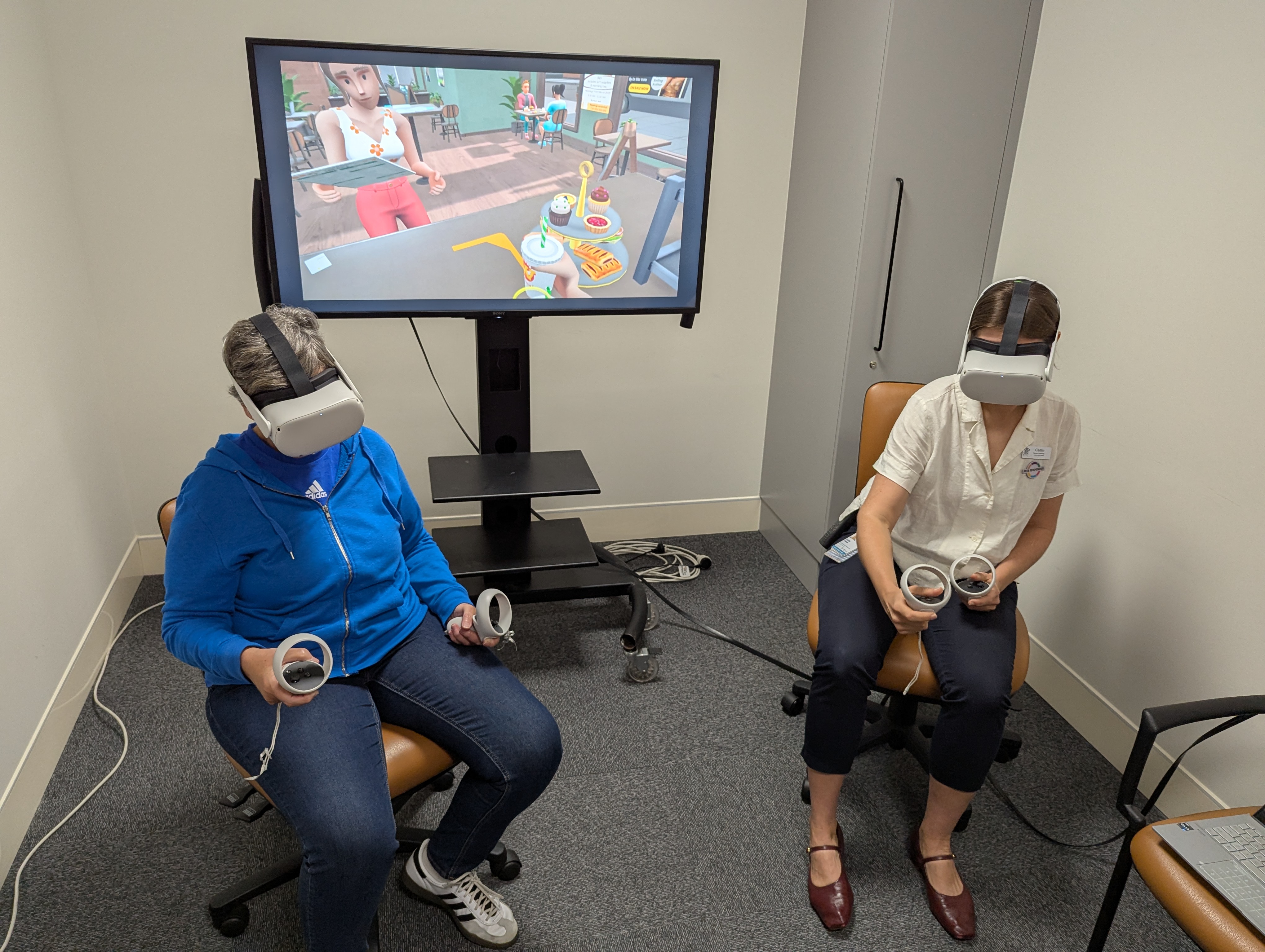
Using VR to bring speech pathologists and patients together in a simulated café environment, the team created a high-tech bridge between the safe, quiet setting of a clinic or patient’s home and the unpredictable, noisy, world outside – tackling everyday challenges with targeted, real-time support.
The result was transformative.
“I can now order coffee and food for myself and my family, and I have the confidence to do this. I’m meeting new people and speaking to other people who have aphasia.”
Having made huge strides in both communication and confidence, Cathy says the support has transformed her quality of life and, crucially, restored the sense of “belonging” stroke stole.
Now designing VR scenarios for combined care – those more complicated environments where occupational therapy, physiotherapy, neuropsychology and speech pathology support might all have a part to play – program lead, Dr Clare Burns, is excited by the project’s potential.

“While it isn’t feasible to routinely visit community locations to practice skills, using VR - which projects a 3D computer image into a headset – effectively takes patients outside the hospital walls and into those environments, alongside their clinicians, for simulated real-world skill building.”
RBWH Foundation donors, Dr Burns said, are the catalyst for turning these bright ideas into the practical, scalable solutions changing lives right here, right now.
For Cathy, the impact of that generosity is tangible – woven, in fact, through this next chapter of her life.
“It’s so important to give whatever you can,” she said, “because you don’t know how many lives you could potentially change”.