
Forget bed rest - RBWH wants patients walking, talking and thinking
Flipping the script on the age-old belief that bed rest is best, a new large-scale photographic installation is enticing patients at Royal Brisbane and Women’s Hospital (RBWH) to get active to boost recovery.
“Keeping our patients’ bodies and minds active whilst in hospital is so important for recovery,” said Advanced Physiotherapist Dr Julie Adsett, “but with care delivered at the bedside, making that happen isn’t as easy as you might think.”
Understanding the extent of the problem – and the processes and practicalities that stand in the way of movement – is something Dr Adsett and her colleagues tackled in previous RBWH Foundation funded studies, in collaboration with RBWH’s Eat Walk Engage team.
“We know from those studies that our patients walk fewer than 450 steps per day and spend less than 10 per cent of daytime hours on their feet. But it’s not just about being physically active; when people spend large proportions of the day in bed, they tend to be less cognitively engaged as well,” Dr Adsett said.
“Patients - particularly our older patients - often tell us their days feel very long; there isn’t a lot for people to do in hospital to keep their minds active.
“Unfortunately, the combination of these things can have impacts far beyond boredom - contributing to patients losing muscle strength and developing complications such as delirium.”
Now recognised as a problem for hospitals the world over, Dr Adsett says Metro North teams are working hard to find solutions.
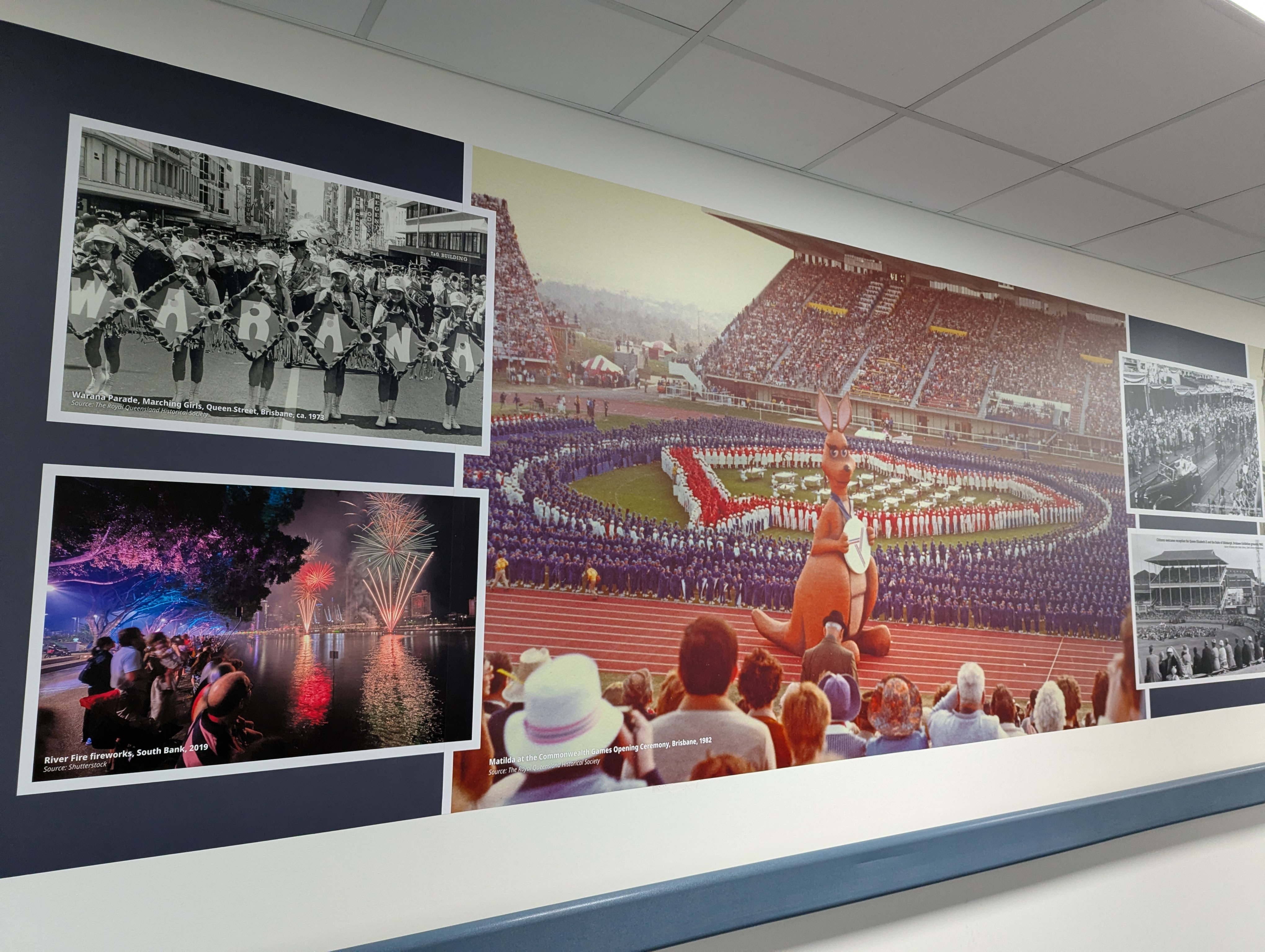
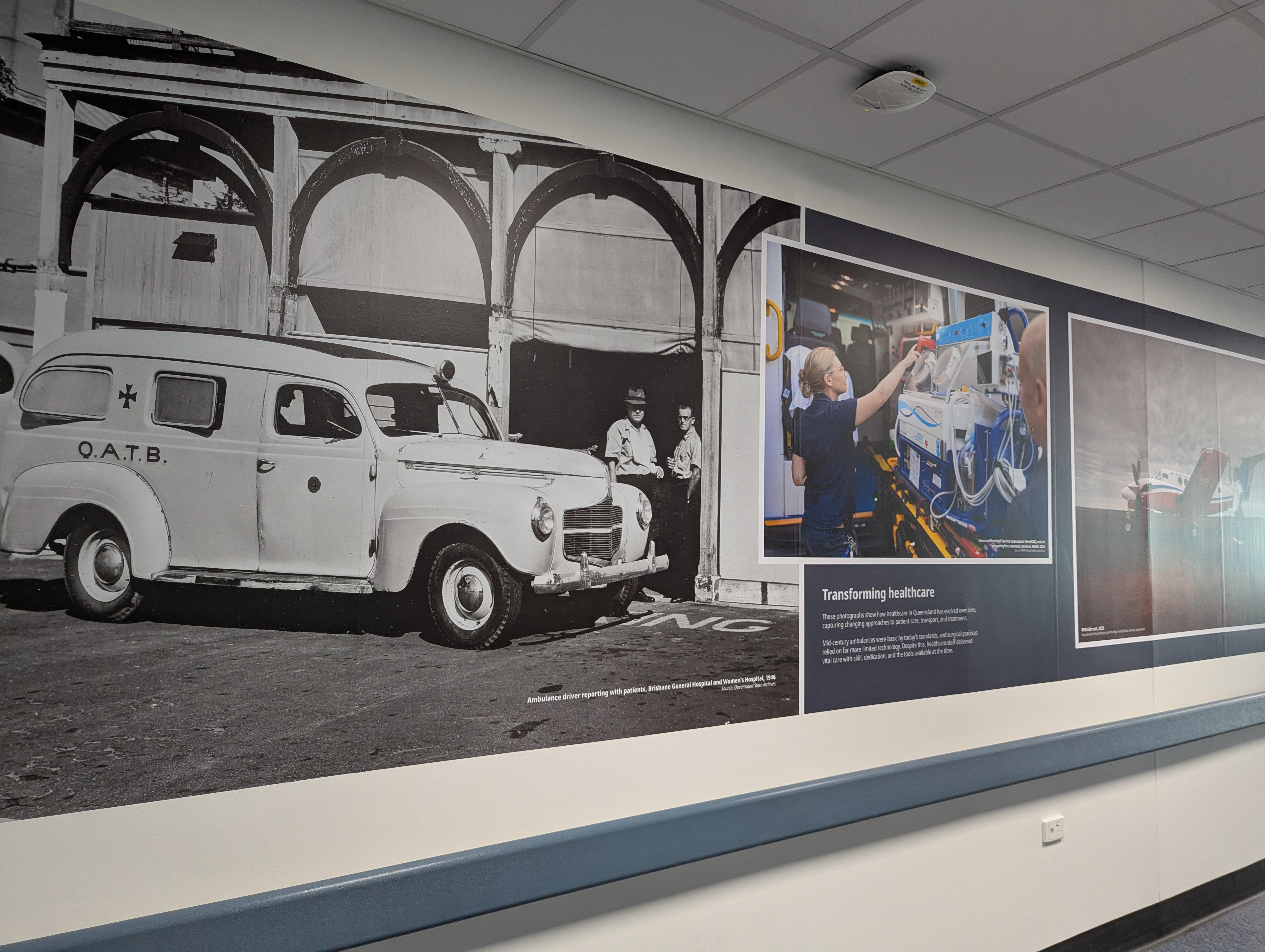
“When you’re unwell, as little as two to three days in bed is enough to cause functional decline. For older patients, that’s the difference between being able to stand up from a chair by yourself and suddenly needing help do so. So, when patients spend time in hospital, loss of independence can happen very quickly.”
It was this challenge which inspired Dr Adsett and Associate Professor Karin Lust to revamp one particularly long hospital corridor with a carefully curated, large-scale photographic installation – creating a ‘stroll down memory lane’.
Funded by the RBWH Foundation and developed with Queensland State Archives, the project uses carefully selected images to bring Queensland’s rich history into the hospital, sparking memories, conversation and connection.
State Archivist Louise Howard, said the collaboration offers a meaningful way to share that history while supporting patient wellbeing.
“Queensland State Archives is delighted to have contributed to Step Back in Time, a project that both celebrates our state's history and fosters connection, conversation and wellbeing for patients, visitors and staff.”
For RBWH Foundation CEO Simone Garske, the project shows how supporting clinician-led ideas can lead to fresh, practical approaches to patient care.
“What began with clinicians asking ‘why?’ has evolved into a great collaboration and, ultimately, a very human solution. We’re incredibly proud to have supported Julie, Karin and their colleagues on that journey, and excited to see the difference this project will make in helping patients stay active, engaged and connected, for the best possible recovery.”
Noting that, compared with modern paediatric environments, adult hospital wards can feel ‘sterile and boring’, Dr Adsett said the project team was committed to giving patients an enjoyable reason to keep moving.
“It’s been a team effort between staff, our design team and consumers, and we’ve had a lot of help along the way. While it’s been a fun process, fundamentally, the purpose is a very serious one,” she said.
“This project is about creating the environment patients need to support their own recovery - a literal stroll down memory lane, with all its benefits for physical and mental wellbeing.”