
One virtual world, many therapies: VR supermarket reimagining rehabilitation 

A pioneering research collaboration, led by Dr Clare Burns, Speech Pathologist at the Royal Brisbane and Women's Hospital (RBWH), is pushing the boundaries of immersive virtual reality (VR) to transform rehabilitation for people recovering from traumatic brain injury and stroke.  

An initial RBWH Foundation grant funded a VR Communication Café. Now the team has received a second Foundation grant to design a more complicated scenario. The chosen setting? A VR supermarket.  
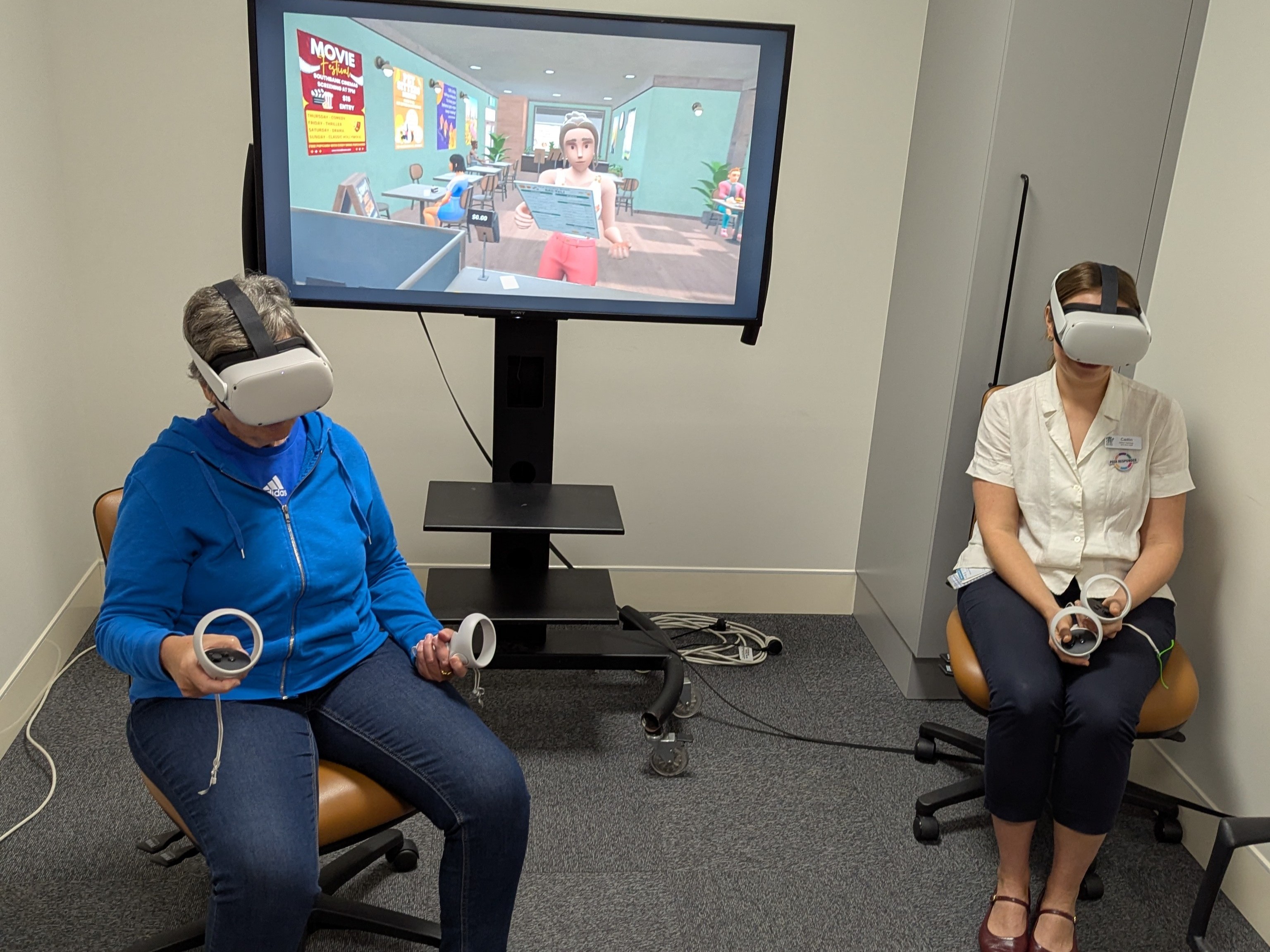
VR rehabilitation in session with RBWH patient.

“The use of Virtual Reality (VR) in rehabilitation is rapidly growing, but there are relatively few examples of it being used by multidisciplinary teams for coordinated care. Our goal is to change that,” Dr Burns said.  

Click to watch the VR rehabilitation in action.
The hospital-led project was funded through community donations to RBWH Foundation, helping Australia’s largest hospital go above and beyond in the delivery of patient care innovation and life-changing research. 

This RBWH Foundation Giving Day, Wednesday 10 June, Queenslanders are being urged to show they care about better health for all, with a gift that makes an extraordinary difference 

From 1 May, every donation will be doubled through the generosity of Giving Partners, for twice the impact. Visit www.rbwhfoundation.com.au/donate
“Giving, together, to the RBWH Foundation has enabled these VR initiatives to grow from early-stage concepts into practical, scalable solutions,” said Dr Burns. 

Creating the VR supermarket has also been a team effort, bringing together people with lived experience and clinicians from disciplines including speech pathology, occupational therapy, physiotherapy and neuropsychology. The goal is to support people to practice a wider range of skills - physical, cognitive and communication.
 
“While it isn’t feasible to routinely visit community locations to practice skills, using VR - which projects a 3D computer image into a headset – effectively takes patients outside the hospital walls and into those environments, alongside their clinicians, for simulated real-world skill building.” 
By transporting patients into realistic, meaningful everyday environments, the program will help rebuild critical physical, cognitive and communication skills, restoring confidence, independence and connection to the world around them. Even from their own homes.   

“Through the co‑design process, we can ensure that the virtual reality environment reflects real‑world challenges and supports the diverse rehabilitation needs of people who are motivated to improve their physical, cognitive, and communication functioning and regain the skills and confidence they need to participate in their community,” Dr Burns said.   
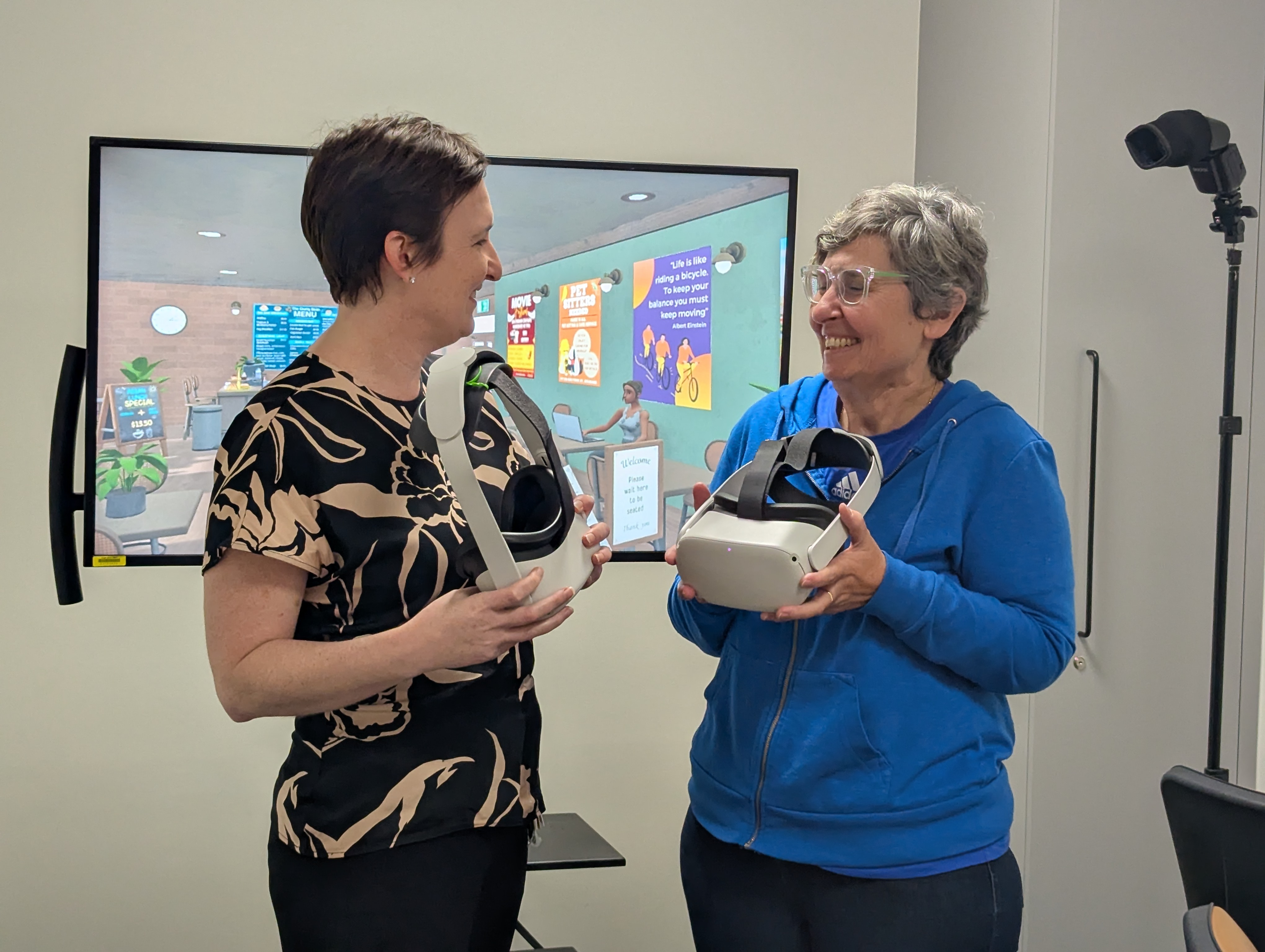
For Dr Burns and the project team of clinicians, technologists and researchers from Metro North Health, Metro South Health and The University of Queensland, results from the Communication Café have proven VR’s potential.   
VR rehabilitation in session with RBWH patient.
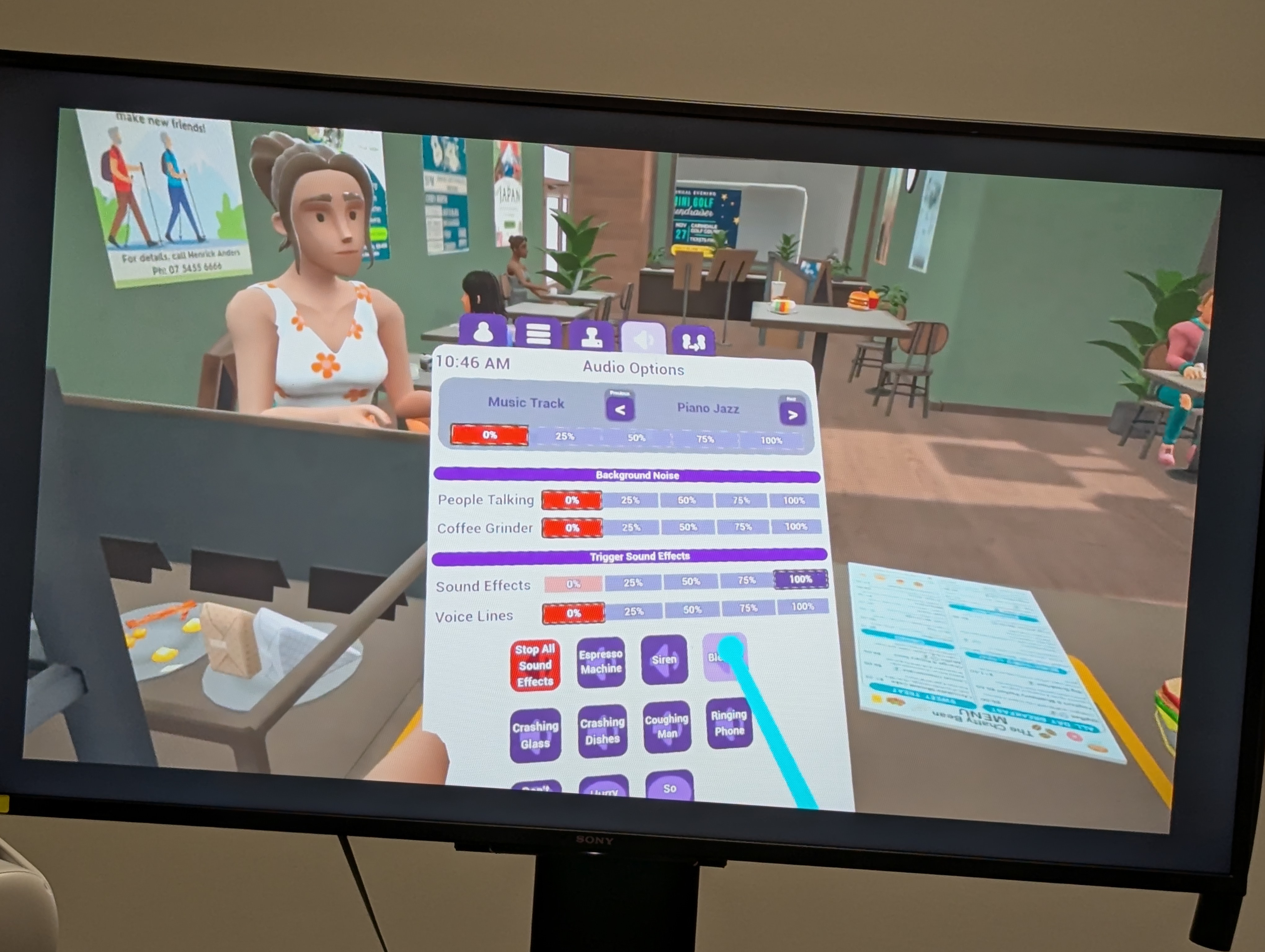
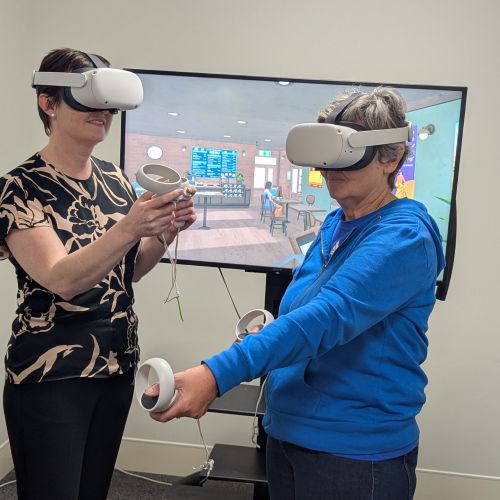
VR Supermarket scenario on TV screen.
“Participants reported improvement in communication skills, confidence and self-awareness, which translated into more positive everyday interactions. Clinicians also noted that the immersive VR café setting provided therapeutic advantages that extended beyond traditional speech therapy approaches.  

“Having been able to integrate with telehealth services has added another exciting dimension – supporting the delivery of rehabilitation services to a wider range of patient populations, in particular for those where distance, transport issues, travel costs and work/family commitments make clinic visits problematic or prohibitive.”  
Media:
Dana Lang - RBWH Foundation Senior Media and Communications Advisor