
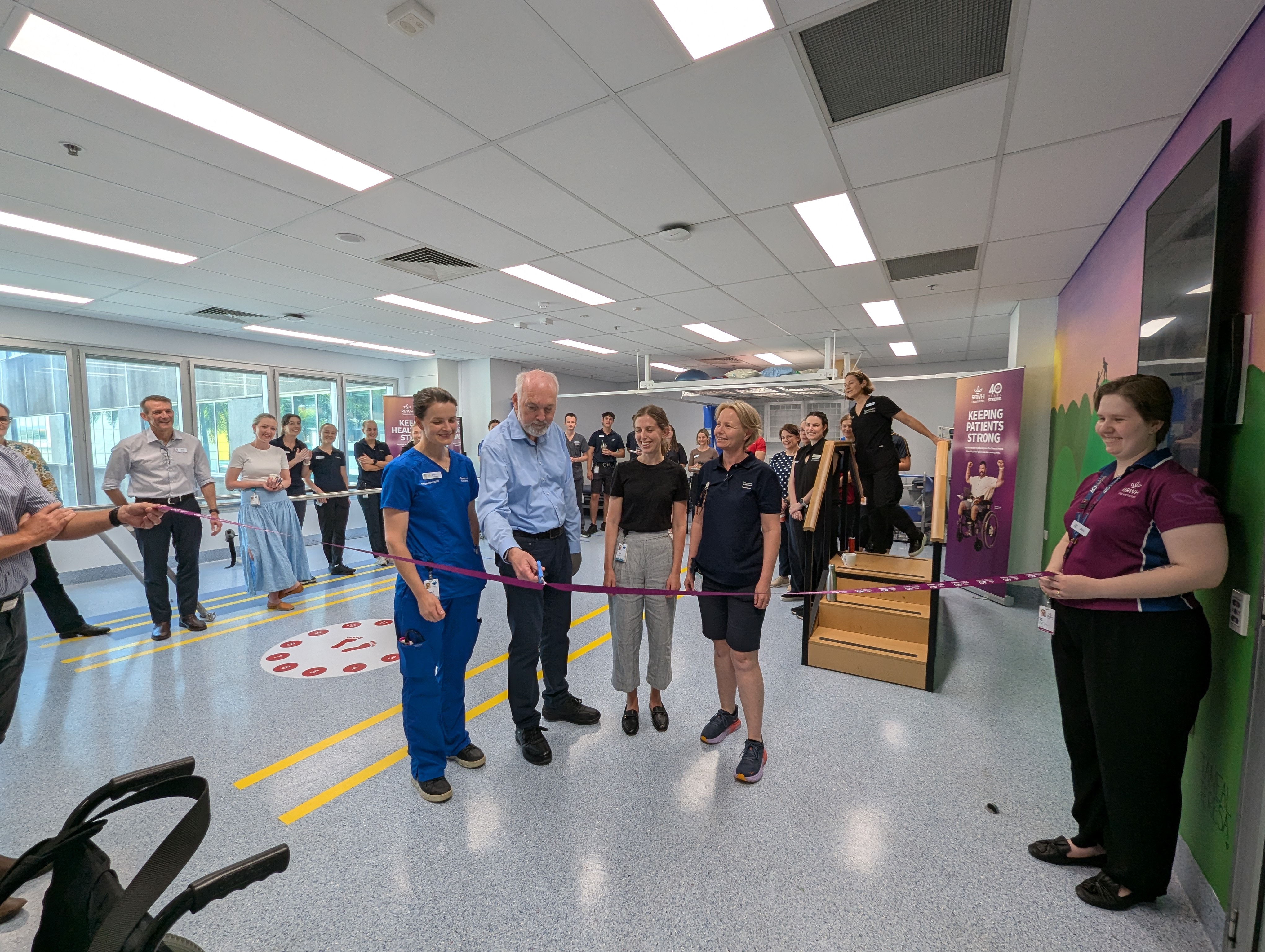
Refurbishment of the Royal Brisbane and Women’s Hospital (RBWH) Level 7 gym is proving transformative for patients relearning how to move, working hard to rebuild their lives and finding hope for recovery.
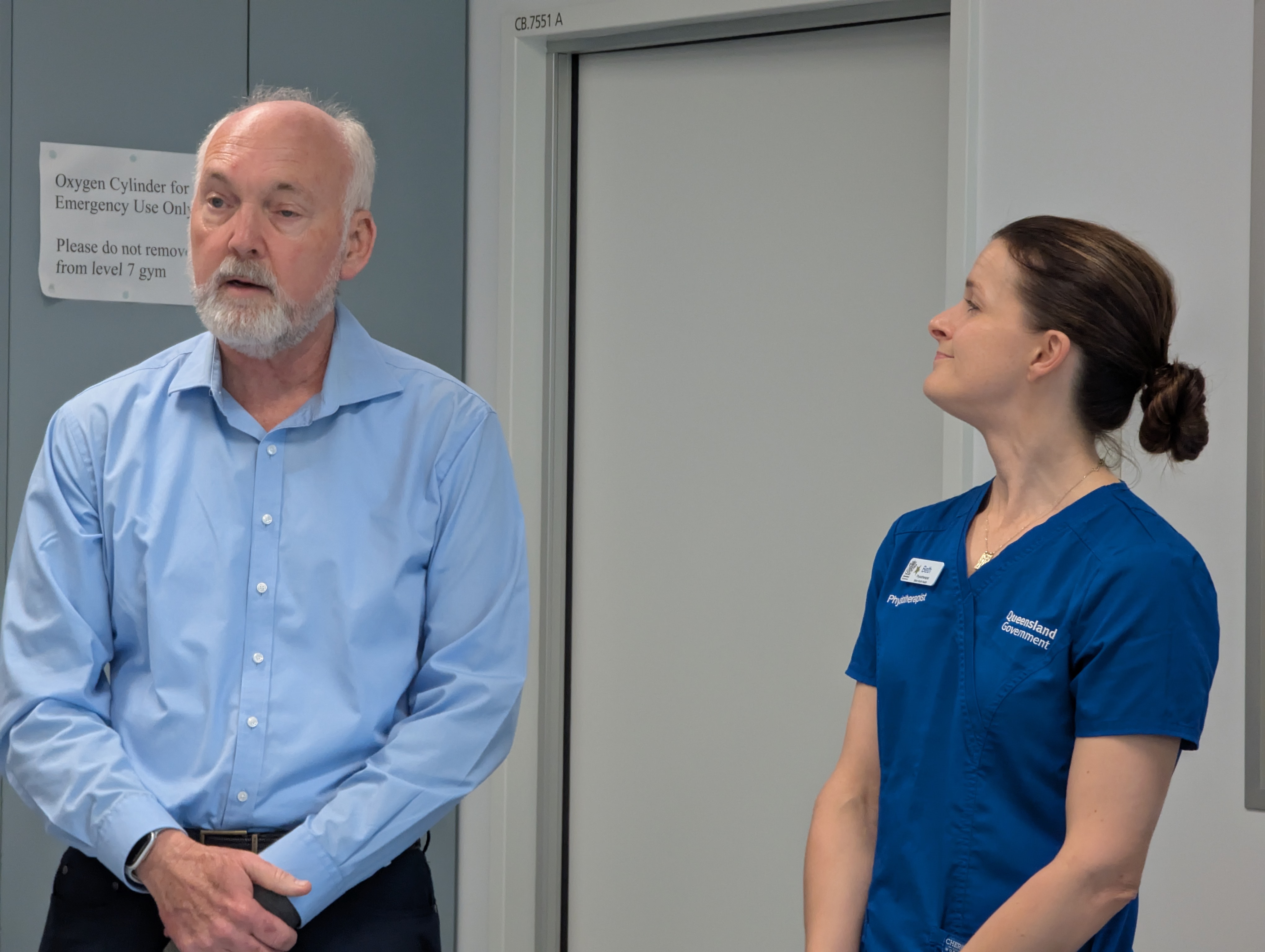
“Never underestimate the impact of your environment on recovery and healing”, stressed RBWH Neurological Physiotherapist, Beth Cunningham, who has used an RBWH Foundation grant to give the patient gym a much-needed makeover.
Spurred on by an emotional conversation with a patient with a spinal cord injury, Beth embarked on a co-design project to create a safer and better physiotherapy space.
“That patient expressed how being in that space made him feel safe to move - to push his recovery and to believe that he could improve. That really struck me,” Beth said.
“He got teary talking about how important it had been for him to come to the gym for therapy - that it gave him hope that he would get better.”
With an RBWH Foundation grant secured, the crucial next step was for Beth’s colleague Laura Donnelly to tap into patient insights, to understand what worked, what didn’t and where changes could deliver the most impact.
Ian Dove - an employee of Queensland Health since 1980 and then stroke patient as of Christmas 2024 – was one of the project participants. After spending a week in RBWH Stroke Unit, three months in the Surgical Treatment and Rehabilitation Service (STARS) and then two months attending day hospital, Ian was more than ready to give back when his physio suggested he have his say in the redesign project.
“The whole process was completely collaborative. For example, even though the gym has huge windows, my impression of the space was of it being dark and cavernous,” Ian said.
“So, while the team looked at how they might improve the lighting, they heard from one of the group who experiences photosensitivity. For that person, a very bright space would have adverse impacts on their wellbeing and recovery. Without patient participation, that could have been missed.”
And the results, he says, are there for everyone to appreciate.
“The gym looks so much better now. When most of your time is spent on a hospital ward – a very controlled, very clinical environment – getting out of there and moving in a new and motivating space is so valuable,” Ian said.
“When I went into the process, I really didn't know what I could contribute. But in fact, I didn’t just contribute, I really benefited from connecting with patients from other wards as well as former patients and their families – people who had moved on from where I was and who helped me see what my future might look like. I feel very lucky to have been involved.”
For Beth, it’s been a hugely rewarding experience, and one she’d encourage other health professionals to explore.
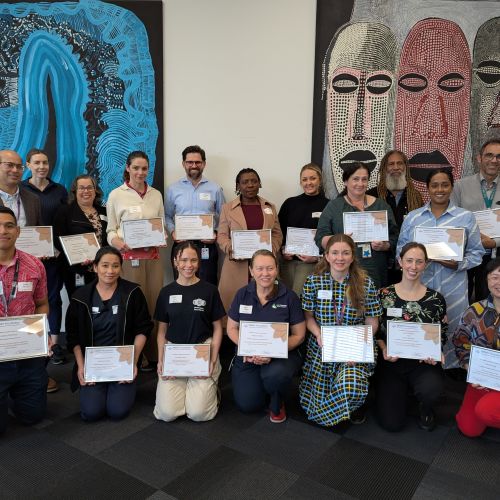
“Seeing the work undertaken by my fellow grant recipients was really moving. There was incredible creativity and passion behind everyone’s projects but, even so, many of them came from simple ideas. Not complex or expensive, but delivering such meaningful impact. It reminded me that no idea is too small,” Beth said.
“Many of our patients have been in their rooms for weeks or months. Moving out into a therapy space is another step in their recovery journey, and it’s an important one, especially in the acute setting. That step into the gym space is part of recovery and of working toward their goals.
“There’s still a lot we still don’t know about how environment and state of mind affect recovery, but I’ve seen firsthand that it makes a difference.”